
About Flagle — match the country to the flag
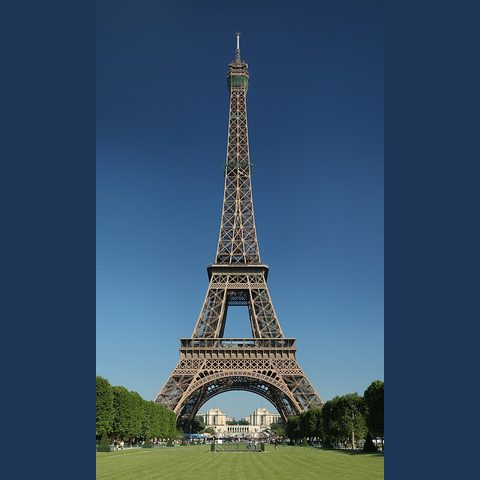
Flagle is a free, no-ads, no-login geography puzzle for children aged 4 to 6. We show a famous picture in the middle of a 3×3 grid — the Eiffel Tower, Mt Fuji, the Colosseum — and put eight country flags around it. Your child taps the flag that goes with the picture. Get it right, score a star. Endless turns, no fail state, gentle pace.
Flagle is the newest face in the Tadpole Games family. Where Fredle teaches phonics and Sumdle teaches number bonds, Flagle introduces the world — one famous landmark and one flag at a time. It’s designed to be played before a child can read.
Who Flagle is for
- Reception (age 4–5) — just starting to learn that the world has different countries. The picture does all the heavy lifting; no reading required.
- Year 1 (age 5–6) — building world knowledge alongside the early-years geography curriculum. Learning that France has the Eiffel Tower, Japan has Mt Fuji, Italy has the Colosseum.
- Home-schoolers and tutors looking for a five-minute geography “warm up” for very young children.
- Parents who want screen-time that quietly teaches something — world flags, famous places, the names of countries — without feeling like a worksheet.
How it works
- A famous picture appears in the middle of a 3×3 grid — for example the Eiffel Tower.
- Eight country flags sit in the cells around it.
- Your child taps the flag that matches the picture. Eiffel Tower → the French flag.
- Right answer? The flag flashes green, a star is added, and the centre flips to a brand new landmark.
- Wrong answer? The flag wobbles red, the picture stays put, and they can try again. Endless turns — no losing.
Why a picture, not a name
Five-year-olds can’t read “France” yet, but they can absolutely recognise the Eiffel Tower. Flagle is built around that fact. The puzzle is always picture-first: the question is an iconic image — the Eiffel Tower for France, Mt Fuji for Japan, the Colosseum for Italy — and the answer is a visual flag, not a written word.
That ordering matters. Picture-recognition comes first; flag-recognition comes second; the country’s name comes third, said by the grown-up alongside. By the time your child can read “France”, they already know what France looks like from the sky — and that the flag is blue, white and red.
How to play with your child
- Say the country aloud each round. “That’s the Eiffel Tower — it’s in France. France has the blue, white and red flag.” Repetition is the lesson.
- Talk about the picture. “The Eiffel Tower is in Paris. People go up to the top in a lift.” A sentence is plenty.
- Talk about the colours of the flag. Children love spotting that lots of flags share the same three colours but in different patterns — that’s real geographic noticing.
- Relate it to something they know. “Auntie Sophie went to Italy on holiday — that’s the Colosseum.”
- Five minutes a day. Short and warm beats long and earnest. The stars only go up.
Frequently asked questions
Is Flagle free?
Yes. Yes. No ads, no data selling, and a generous free puzzle every day. Premium unlocks all our games — monthly or yearly (current prices on the Account page). No data collection beyond anonymous page analytics.
Can my child fail?
No. There is no timer, no lives, and no fail state. A wrong tap just gives a gentle wobble — the picture stays in place and they can try again. Stars only go up.
Which countries does Flagle cover?
Flagle has sixty-one countries across five difficulty tiers, in the same gentle progression style as Sumdle. Your child starts with the easiest eight and unlocks more as they earn stars:
- Tier 1 — from the first round. Eight starter countries: France (Eiffel Tower), Japan (Mt Fuji), Italy (Colosseum), USA (Statue of Liberty), UK (Big Ben), Brazil (Christ the Redeemer), Greece (Parthenon), Australia (Sydney Opera House).
- Tier 2 — unlocks at 5 stars. Eight more well-known countries: India (Taj Mahal), Egypt (Pyramids of Giza), China (Great Wall), Germany (Brandenburg Gate), Spain (Sagrada Família), Netherlands (Kinderdijk windmills), Canada (Niagara Falls), Mexico (Chichén Itzá).
- Tier 3 — unlocks at 15 stars. Twelve more: Russia, Peru, Ireland, Portugal, Switzerland, Norway, Turkey, Thailand, South Africa, South Korea, Indonesia, Iceland.
- Tier 4 — unlocks at 35 stars. Sixteen more: New Zealand, Denmark, Finland, Sweden, Hungary, Czechia, Austria, Belgium, Poland, Kenya, Morocco, Vietnam, Singapore, Malaysia, Chile, Argentina.
- Tier 5 — unlocks at 70 stars. Seventeen challenge countries: Nepal, Sri Lanka, Bangladesh, Myanmar, Philippines, Venezuela, Colombia, Ecuador, Costa Rica, Cuba, Jamaica, Uzbekistan, Mongolia, Iran, Pakistan, Zambia, Nigeria.
Each new tier comes with a small celebration so your child knows new countries have appeared. Stars only go up — the tiers do not reset on a wrong answer.
What if my child can’t read?
Perfect — Flagle is built for them. The question is a picture, the answers are flags, and there are no country names on the playing cells. The only words on the screen are for the parent reading along. It’s a true pre-reading game.
Does it work offline?
Yes once the page has loaded. Add it to your home screen for an app-like experience — great for car journeys.
More from Tadpole Games
- Fredle — a daily phonics word puzzle for UK children aged 4 to 7.
- Sumdle — trace two digits and an operator across a mixed grid to make a number.
- Flower Match — drag each flower across to its leaf and learn fourteen common UK plants by sight.
Photo credits
All sixty-one landmark photographs are from Wikipedia and Wikimedia Commons, used under CC BY-SA 4.0 or compatible free-culture licences. Each photograph is the lead image of the corresponding landmark’s English Wikipedia article — search the landmark name (e.g. “Taj Mahal”, “Mount Everest”) on Wikipedia for the original photographer’s credit and licence.